

The approach that works is a tight, value-first, multi-channel sequence built on precise targeting instead of mass outreach. Recruiters who run a four-touch sequence with short, personalized messages typically see stronger reply rates and faster conversion to conversations than those relying on generic InMails. The next step is simple: build one target list, write four distinct touches, and measure the reply rate before you scale.
TL;DR:
- Passive candidate engagement involves targeted, value-driven outreach with about 70% of professionals being passive at any time, requiring proactive sourcing efforts.
- Response rates can reach 25 to 40% with well-structured multi-channel sequences, significantly higher than generic InMail campaigns.
- A four-touch sequence over two weeks, with channels rotating strategically, and personalized messaging improve reply and interview conversion rates.
- Tracking key metrics such as reply rate, time to first reply, and offer acceptance is essential to refine outreach strategies and justify investment.
- Automation can handle scheduling and follow-ups, but personalized judgment and transparency about AI use are crucial to build trust with candidates.
Table of Contents
- What Passive Candidate Engagement Actually Means
- Why This Work Pays Off in Hiring Outcomes
- The Tactical Playbook: Strategies That Work Right Now
- Cadence and Timing: A Template You Can Copy Today
- How to Measure Passive Candidate Engagement
- Tools and Automation: What to Hand Off and What to Keep Human
- Turning One-Time Interest Into a Talent Community
- Your First-Run Checklist and Two Templates to Adapt
- What IXCommunities Sees Across Corporate Talent Teams
- What Changes Once You Actually Run This Playbook
- Put the Playbook Into Practice With IXCommunities
- Sources
- FAQ
What Passive Candidate Engagement Actually Means
Passive candidate engagement is the deliberate, ongoing effort to build relationships with professionals who aren't actively job hunting but would consider the right opportunity. It isn't mass messaging, and it isn't a rebranded version of active applicant management, where candidates already raised their hand. The distinction matters because the tactics that work for someone who applied to your job posting will fall flat on someone who didn't ask to hear from you.
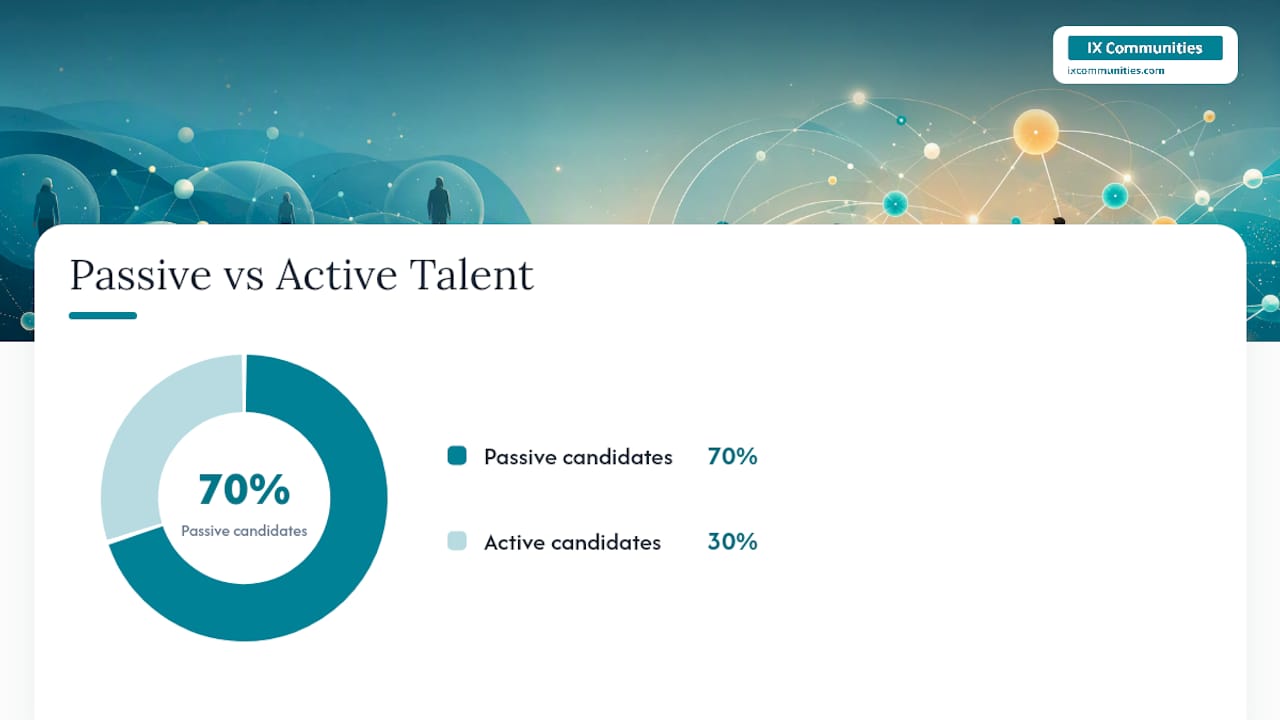
Roughly 70% of professionals qualify as passive candidates at any given time, not actively searching but open if the opportunity fits. That's the majority of the talent market sitting outside your applicant tracking system, reachable only through proactive passive candidate sourcing.
What separates real engagement from noise:
- Messages reference something specific about the person's background or work, not a job title match.
- Outreach offers value (insight, connection, information) before asking for anything.
- Contact respects a cadence and stops when someone signals no interest.
- The person controls the pace, not the recruiter's quota.
Why This Work Pays Off in Hiring Outcomes
Passive engagement changes two numbers that leadership actually cares about: quality of hire and time to fill hard roles. Candidates who weren't job hunting but respond to a well-targeted message tend to be more selective and more aligned to the role, since they didn't apply out of urgency.
The benchmark to watch: structured, AI-personalized multi-channel sequences can reach 25 to 40% response rates, compared to the low single digits typical of unpersonalized cold InMails.
Track these against your own historical numbers, not just industry averages:
- Reply rate by channel and by touch number, not just overall.
- Conversation to interview conversion, which reveals whether your qualifying questions are doing their job.
- Time to first reply, a leading indicator of message quality.
- Offer acceptance rate by source, since passive hires often need a different closing approach than active applicants.
Stakeholders fund what they can measure. A recruiter who walks into a budget conversation with reply-rate trends by channel has a stronger case than one with anecdotes.
The Tactical Playbook: Strategies That Work Right Now
Engaging passive candidates well comes down to seven interlocking moves, echoing the practical structure Sapia lays out for 2026. Run them in order.
-
Build a precise target list with a real reason to talk. Don't source by job title alone. Look for a specific signal: they published something relevant, moved companies recently, worked on a project that maps to your open role. The reason to talk becomes the first line of your message. Vague targeting produces vague outreach, and candidates can tell.
-
Lead with value, not a pitch. Value-first outreach means the first message gives the person something useful. A relevant market insight, a genuine compliment on specific work, an invitation to a discussion they'd care about. Asking "Are you open to new opportunities?" in message one is the fastest way to get ignored.
-
Personalize opening lines without writing from scratch every time. The scalable version of personalization is a template with one or two bespoke lines swapped in per candidate, not a fully custom message for every name. Build a message skeleton, then insert the specific detail that proves you did your homework. Keeping messages under roughly 400 characters also correlates with meaningfully higher reply rates.
-
Rotate channels with intent, not randomly. Email works for a detailed first touch. LinkedIn works for a lighter, more social second touch. Phone or SMS works only after some rapport exists. Each channel should add something the last one didn't, whether that's new information, a lower-friction ask, or a different tone.
-
Design the first step to require almost no effort. Asking a passive candidate to fill out a long application is a mismatch for someone who wasn't looking. Asynchronous video responses, a 15-minute self-scheduled call, or a short async questionnaire all lower the barrier to a first yes.
-
Run a light nurture lane for "not now." Most passive candidates who reply won't be ready to move immediately. Tag them, set a follow-up date three to six months out, and send occasional relevant content instead of going silent. This is where nurturing passive candidates turns a "no" today into a "yes" later.
-
Standardize assessment the moment interest appears. Once a passive candidate says yes to a conversation, treat them the same as any other candidate in your process. Inconsistent, ad hoc evaluation for passive hires is where bias creeps in and where good candidates fall through cracks.
Pro Tip: Write your four-touch sequence before you source a single name. If you can't articulate what touch three adds that touch two didn't, the sequence isn't ready to send.
Cadence and Timing: A Template You Can Copy Today
Structure beats improvisation. A four-touch sequence spread over roughly two weeks gives candidates enough time to notice you without feeling chased, a rhythm supported by analysis of passive outreach performance.
- Day 1: Value-first email or InMail. Specific, short, no ask beyond "worth a quick chat?"
- Day 4: LinkedIn touch. Lighter tone, reference the first message, add one new piece of information.
- Day 9: Second email with a concrete next step. Offer a specific time slot or async option.
- Day 14: Final, brief message. Acknowledge the timing may be wrong, leave the door open, and stop.
Adjust cadence by seniority and geography. Senior leaders and executives often need longer gaps between touches, five to seven business days, since their calendars move slower and rushed follow-up reads as pressure. Candidates in different time zones need to send times adjusted for their morning, not yours.
A few cadence rules worth locking in:
- Reserve SMS for candidates who've already engaged through another channel. Cold texting a stranger about a job feels invasive and damages your employer brand.
- Stop after four touches if there's no response. Repeating the same message rarely improves reply rates once flat messaging fails to add new information.
- Log a "not now" reply as a snooze, not a dead end, and set a concrete re-engagement date instead of an indefinite "later."
How to Measure Passive Candidate Engagement
You can't improve what you don't track in your ATS or CRM. Build a dashboard around a handful of fields tied directly to passive-sourcing activity, an approach Manatal recommends for teams scaling outreach.
Core KPIs to capture:
- Reply rate by channel and by touch number.
- Time to first reply, measured in business hours.
- Meeting acceptance rate once a candidate replies.
- Conversation to interview conversion rate.
- Offer acceptance rate segmented by source (passive outreach vs. referral vs. inbound).
Benchmark context: cold outreach to a fresh passive list typically converts far lower than outreach to a warm talent community or an employee referral, so compare your numbers against the right baseline, not a blended average.
Run small A/B tests before committing to one message format: two subject lines, two opening-line structures, two channel orders. Test on batches of 50 to 100 candidates so results are readable within a week, not a quarter.
Tools and Automation: What to Hand Off and What to Keep Human
Automate the mechanical parts of the workflow: sequence scheduling, follow-up reminders, and reply-rate analytics. Keep judgment calls, tone, and final message review human. Greenhouse's guidance on candidate engagement points to multi-touch nurture automation and consistent follow-up as the operational backbone that frees recruiters for higher-value conversations.
AI can speed up personalization at scale by drafting the templated skeleton and suggesting the bespoke detail to insert. It should never be the last set of eyes on a message before it sends.
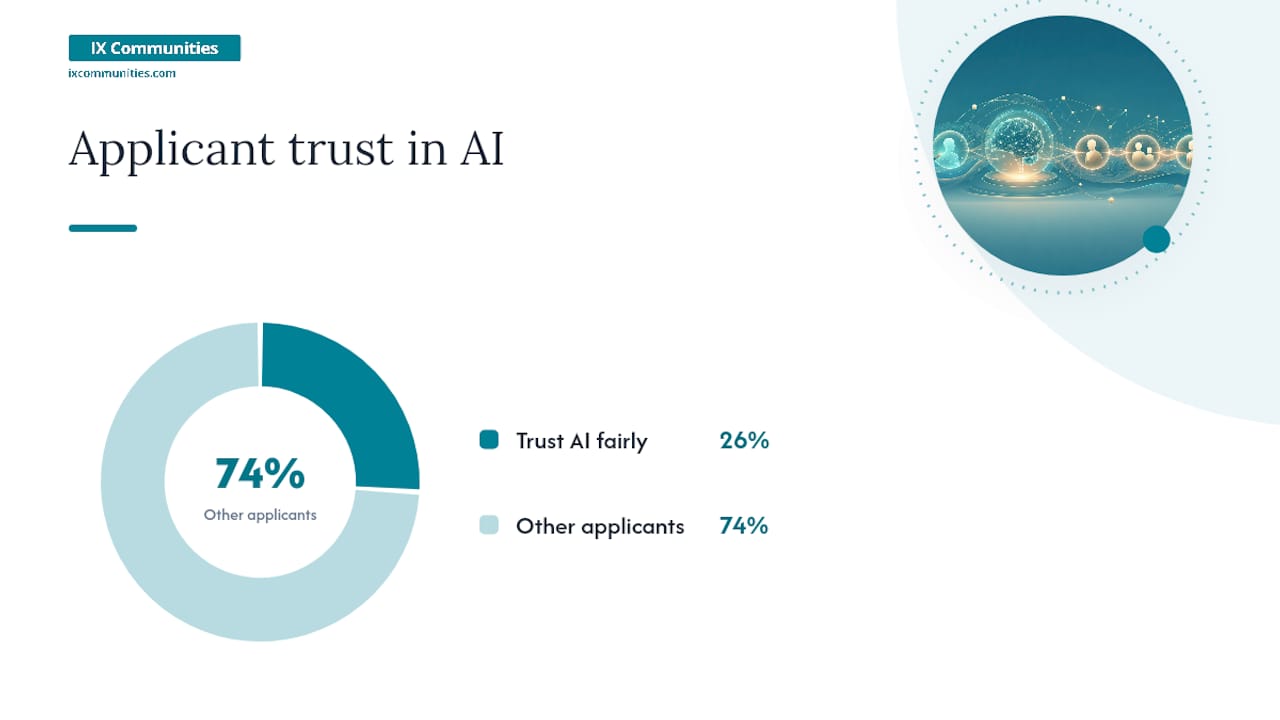
Candidate trust is the real constraint here. Gartner found that only 26% of job applicants trust AI to evaluate them fairly, which argues strongly for disclosure whenever AI drafts or screens.
Before adopting any tool, check for:
- Clear disclosure language candidates will actually see.
- Tone controls so messages don't sound robotic.
- Native ATS/CRM integration, not a bolt-on that duplicates data entry.
- A recruiter override on every automated send, no exceptions.
Pro Tip: Tell candidates plainly when AI helped draft a message. The disclosure sentence costs you nothing and it's the cheapest trust you'll ever buy.
Turning One-Time Interest Into a Talent Community
A pipeline is transactional. A talent community is relational. The difference shows up the moment a role opens: pipelines require you to start from zero, while a community already has people who know your organization and expect to hear from you occasionally.
Content that earns attention without asking for anything: a short piece of original research, an informal "ask me anything" with a hiring manager, or a role teardown that explains what a job actually involves day to day. None of this pitches a specific opening.
Operational signals worth capturing over time:
- Snooze dates from "not now" conversations.
- Topics or content a candidate engaged with.
- Explicit interest flags (a candidate who says "keep me in mind for X").
Long-term candidate relationships built this way respond faster and more warmly when you finally do have the right role open.
Your First-Run Checklist and Two Templates to Adapt
Run your first passive engagement sequence with this order:
- Target: Build a list of 30 to 50 candidates with a specific reason to talk for each.
- Craft: Write one message template with room for one personalized line.
- Sequence: Map four touches across two weeks, rotating channels.
- Log: Add fields for reply date, channel, and outcome to your ATS or CRM.
- Measure: Pull reply rate and time to first reply after two weeks.
Add these fields to your ATS or CRM if they're missing: source channel, touch number, reply date, snooze date, and interest flag.
Two prompts to adapt, not copy verbatim: an opening line that names one specific detail from the candidate's public work and asks a low-pressure question, and a follow-up angle that adds new information the first message didn't mention rather than repeating the ask.
What IXCommunities Sees Across Corporate Talent Teams
Peer networking and benchmarking groups exist exclusively for corporate talent acquisition, executive recruiting, and diversity recruiting leaders, operating in a vendor-free environment for many years. That gives member organizations a way to sanity-check reply-rate targets and cadence decisions against peers running similar programs, rather than guessing at benchmarks from marketing content alone. Peer-sourced, confidential comparison is the core of how Ixcommunities operates.
What Changes Once You Actually Run This Playbook
Two things surprise recruiters who commit to this approach. First, reply rates improve faster than pipeline volume, since a tighter target list means fewer names but better conversations. Second, the nurture lane produces more hires than expected, often three to six months after first contact.
The common failure mode: abandoning the sequence after two touches because early silence feels like rejection. It usually isn't.
Run one experiment this week. Take 30 names, write four distinct touches, and measure only the reply rate.
— Simon
Put the Playbook Into Practice With IXCommunities
A vendor-free space exists exclusively for corporate talent leaders to benchmark tactics like these against real peer data, not marketing claims. If you want structured, hands-on training to build the sequences and dashboards this article outlines, the recruiter training courses run from on-demand to live online formats to full team-intact sessions. If you'd rather compare your reply-rate targets against other talent leaders running the same playbook, TLIX Membership gives you that peer benchmarking in a confidential setting. Either route gets you past guessing and into a program built for corporate recruiting functions. Start by reviewing the course catalog and picking the format that matches how your team learns.
Sources
- How to Source Passive Candidates: A Guide for Recruiters — Manatal
- How to improve candidate engagement: 6 best practices — Greenhouse
- How to Engage Passive Candidates (Without Spamming) — Pin (Ghost article)
- Gartner press release on candidate trust in AI evaluations
- Sapia
FAQ
What Does Passive Engagement Mean in Recruiting?
Passive engagement means building a relationship with someone who isn't actively job hunting, usually through value-first outreach rather than a direct job pitch. It relies on personalization, patience, and a genuine reason to talk, not mass messaging.
What Does It Mean to Be a Passive Job Applicant?
A passive applicant is someone who didn't apply to a posting and isn't actively searching, but who would consider a strong opportunity if approached the right way. This describes roughly 70% of the professional talent pool at any given time.
What Are Some Red Flags in a Passive Candidate's Profile?
Watch for unexplained short tenures across multiple roles, vague or inflated titles that don't match described responsibilities, and inconsistent timelines between platforms. None of these disqualify a candidate outright, but they warrant a direct question early in the conversation rather than an assumption either way.
How Many Touches Should a Passive Outreach Sequence Include?
Four touches spread across roughly two weeks is the practical standard, rotating channels and adding new information at each step. Sequences that repeat the same message without new value tend to lose reply rates after the fourth touch.
Can IXCommunities Help With Passive Candidate Engagement Training?
Yes. Ixcommunities offers recruiter training courses in on-demand, live online, and team-intact formats, plus peer benchmarking through membership communities like TLIX for talent leaders comparing engagement tactics.